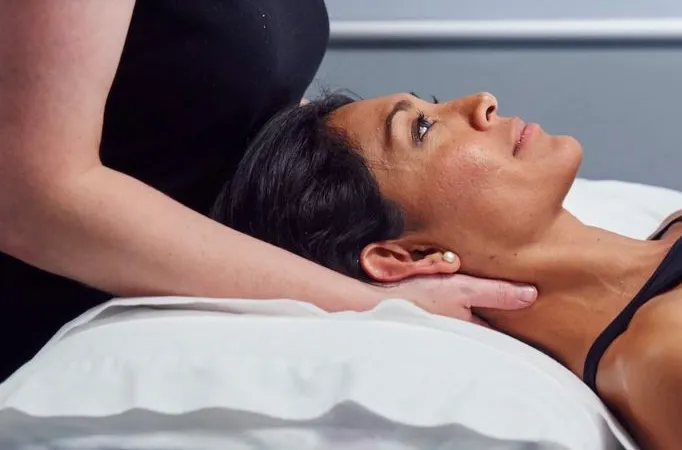
Assessment
A full hour on your history and how your body actually moves. You leave with a working diagnosis you understand and a clear plan you can actually follow.
Our physiotherapists help you move through pregnancy and recover after birth with confidence, treating pelvic pain, low back pain, weakness after birth and bladder symptoms across six central London clinics, with one-to-one, exercise-led care that rebuilds your pelvic floor and core so you get back to the life and activity you want.

If you are weighing up whether your symptoms need looking at, our guide walks through what the pelvic floor does, which symptoms point to a weak versus an overactive pelvic floor, what happens at an assessment, and what the evidence says about results. It also sets out plainly what we treat here and when we will refer you on.

We work out what is really holding you back, then agree the plan with you before you leave.
Your first appointment runs a full 60 minutes: a detailed history, then a thorough examination of how you move, your strength, and the affected area. We explain what we find in plain English and agree a working diagnosis with you.
Treatment starts the same day, and you leave with the first exercises of a plan built around your goal.
We assess how your pelvis, lower back and hips are coping with pregnancy and give you hands-on relief and a gentle exercise plan, so you can keep moving comfortably through every trimester.
Postnatal care rebuilds your core and pelvic floor at the right pace for your body, helping you return to lifting, exercise and daily life with confidence rather than lingering weakness.
Supervised, individually graded pelvic-floor training is the first-line approach for bladder leaks, and we coach the technique properly so it actually works rather than handing you a leaflet.
Many women improve stress or mixed urinary symptoms with the right progressive programme, and we build it into your wider recovery instead of treating it in isolation.
We map a graded return from low-impact loading back to running, with clear milestones matched to your healing and symptoms, so you get back to training without setbacks.
I had a fantastic experience working with Katrina as my physiotherapist. From the start, she was incredibly friendly and genuinely listened to my concerns. She adapted my rehab plan specifically to suit my individual needs and time frame, as I was preparing for a move and had a clear goal to be back playing football. Katrina not only helped me reach that goal right on time, but she also used a variety of techniques, including dry needling and massage, to relieve tightness in the surrounding muscles and support my overall recovery. Her attention to detail, encouragement, and tailored approach made a real difference in my progress. I would recommend her to anyone looking for a physio!
Read on Google
Katrina is outstanding. After struggling with a stubborn Achilles injury, she not only got me pain-free but back to running and sport. Her expertise in acupuncture, massage, and tailored rehab planning is second to none. On top of that, she brings great energy and conversation that make each session genuinely enjoyable. If you need a physio who combines real skill with a personal touch, Katrina is the one to see.
Read on Google
Great experience with Katrina. She helped me with a sprained ankle with a very doable and effective treatment plan. The exercises were not overcomplicated and easy to incorporate into my day to day life which meant that I actually did them and was able to recover within 5 weeks in time to do a tough mudder. Really easy to chat to! Would recommend.
Read on Google
Katrina was great with me! I had a hip injury and expected it to take ages to fix but with the exercises she gave me to do and acupuncture, it all went away quite quickly. I now have exercises I can do regularly in the future and knowledge on how to prevent. Great experience!
Read on Google

You can book online directly, with no GP referral needed and same-week appointments across all six clinics. If you are using private health insurance, check your policy first: some insurers ask for a GP referral before your first session.
Everything is built around you. Whether the goal is a marathon or a comfortable commute, we find what is driving the problem, treat it, and build the strength that keeps the fix in place. Our aim is to get you better and give you the tools to stay better for the long term.
A full hour on your history and how your body actually moves. You leave with a working diagnosis you understand and a clear plan you can actually follow.

Hands-on care to settle symptoms and restore movement: joint mobilisation, soft-tissue work and dry needling where they genuinely help, in line with national guidance.

Progressive exercise that returns the strength, control and load tolerance your body needs for work, sport and everything in between. This is the part that makes recovery last.

A short home programme, sensible loads, and the habits that keep problems rare. Then we discharge you: we don't sell sessions you don't need.
Move well, move freely. That has been the idea since 1997. We settle the symptoms first, then rebuild the strength that stops them coming back, so you finish stronger than when you started.


FAQ
It treats the muscle, joint and pelvic floor problems that come with pregnancy, birth and the years after: pelvic pain, low back pain, a gap between the tummy muscles, and leaking urine when you cough or exercise. We lead with explanation and a supervised exercise programme, which national guidance recommends before anyone considers surgery.
Yes, at every stage of pregnancy, as long as you are seen by a physiotherapist trained in this area. We regularly treat pelvic, low back and rib pain in pregnancy, and help you get ready for the birth and the recovery after it. Tell us how far along you are when you book, so we match you well.
Often, yes. National guidance recommends at least three months of supervised pelvic floor training as the first thing to try, and most women improve once the technique is right and the programme builds properly. We coach the movement properly and build it into your wider recovery rather than treating it in isolation.
Our care here is exercise- and education-led. Where an internal pelvic floor examination is the right next step, we will tell you and make sure you see an appropriately trained pelvic-health physiotherapist or specialist. Please raise this when you book so we can plan your first appointment around the right clinician and the right setting.
There is no single date. It depends on your birth, how you are healing, your pelvic floor, and how fit you were before. Guidance suggests building back gradually, starting low-impact before you run. We assess where you are, give you the milestones to progress through, and adjust the plan as your strength and symptoms allow.
Get Started
Soho Physiotherapy • 111 Charing Cross Road, London WC2H 0DT
BookAppointments typically available within 1–2 weeks