Assessment
A full hour on your history and how your body actually moves. You leave with a working diagnosis you understand and a clear plan you can actually follow.
Our clinicians ease the muscle tension and tightness holding back your training, targeting the areas your sport, injury or desk-bound week actually loads, so you recover faster, move more freely and perform better, delivered as part of our physiotherapy practice across six central London clinics rather than as a stand-alone treatment.


We work out what is really holding you back, then agree the plan with you before you leave.
Your first appointment runs a full 60 minutes: a detailed history, then a thorough examination of how you move, your strength, and the affected area. We explain what we find in plain English and agree a working diagnosis with you.
Treatment starts the same day, and you leave with the first exercises of a plan built around your goal.
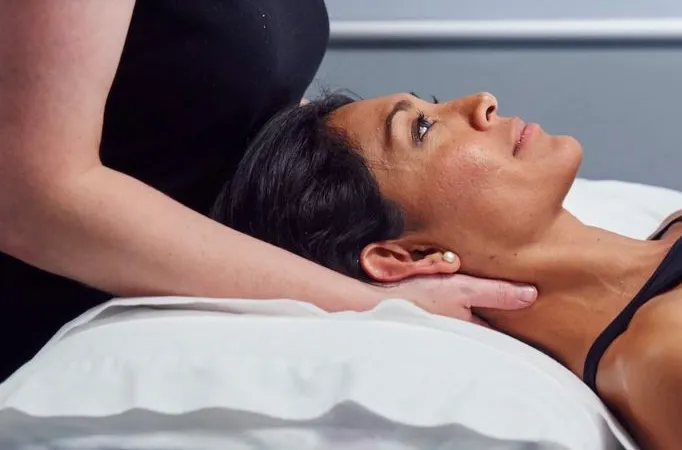
Soft tissue work reduces muscle tension, improves circulation, and helps tissue recover faster between sessions. By easing tightness and supporting blood flow, it lets you train more consistently and bounce back quicker, whether you run, lift, or sit at a desk all week.
Releasing tight muscles and the fascia around them restores range of movement at the joints they cross. Over a few sessions you move more freely, reach end range with less effort, and hold better positions in training and daily life.
Tight, overloaded tissue is more likely to strain. Regular soft tissue work keeps muscles supple and balanced, settles the small niggles early, and pairs with simple exercise advice so problems are less likely to build into something that stops you.
This is what soft tissue therapy does best. We find the tight, tender areas, work them down with hands-on pressure, and show you how to keep them settled so the relief lasts well beyond the treatment couch.
Supple, well-recovered muscles produce force more efficiently and tire less quickly. Used alongside your training, soft tissue work helps you move better, hold technique for longer, and get more out of each session.
I had a fantastic experience working with Katrina as my physiotherapist. From the start, she was incredibly friendly and genuinely listened to my concerns. She adapted my rehab plan specifically to suit my individual needs and time frame, as I was preparing for a move and had a clear goal to be back playing football. Katrina not only helped me reach that goal right on time, but she also used a variety of techniques, including dry needling and massage, to relieve tightness in the surrounding muscles and support my overall recovery. Her attention to detail, encouragement, and tailored approach made a real difference in my progress. I would recommend her to anyone looking for a physio!
Read on Google
Katrina is outstanding. After struggling with a stubborn Achilles injury, she not only got me pain-free but back to running and sport. Her expertise in acupuncture, massage, and tailored rehab planning is second to none. On top of that, she brings great energy and conversation that make each session genuinely enjoyable. If you need a physio who combines real skill with a personal touch, Katrina is the one to see.
Read on Google
Great experience with Katrina. She helped me with a sprained ankle with a very doable and effective treatment plan. The exercises were not overcomplicated and easy to incorporate into my day to day life which meant that I actually did them and was able to recover within 5 weeks in time to do a tough mudder. Really easy to chat to! Would recommend.
Read on Google
Katrina was great with me! I had a hip injury and expected it to take ages to fix but with the exercises she gave me to do and acupuncture, it all went away quite quickly. I now have exercises I can do regularly in the future and knowledge on how to prevent. Great experience!
Read on Google

You can book online directly, with no GP referral needed and same-week appointments across all six clinics. If you are using private health insurance, check your policy first: some insurers ask for a GP referral before your first session.
Everything is built around you. Whether the goal is a marathon or a comfortable commute, we find what is driving the problem, treat it, and build the strength that keeps the fix in place. Our aim is to get you better and give you the tools to stay better for the long term.
A full hour on your history and how your body actually moves. You leave with a working diagnosis you understand and a clear plan you can actually follow.

Hands-on care to settle symptoms and restore movement: joint mobilisation, soft-tissue work and dry needling where they genuinely help, in line with national guidance.

Progressive exercise that returns the strength, control and load tolerance your body needs for work, sport and everything in between. This is the part that makes recovery last.

A short home programme, sensible loads, and the habits that keep problems rare. Then we discharge you: we don't sell sessions you don't need.
Move well, move freely. That has been the idea since 1997. We settle the symptoms first, then rebuild the strength that stops them coming back, so you finish stronger than when you started.


FAQ
No. Physiotherapy is a regulated clinical profession covering assessment, diagnosis, and rehabilitation. Sports massage is soft-tissue therapy supporting recovery and treating localised muscle tension. At Soho Physiotherapy our sports-massage clinicians refer across to physio if your problem needs more than soft-tissue work: book physio first if you have a clear injury or persistent pain.
For active people training 3 or more times a week, monthly sessions maintain tissue health. During heavy training blocks (marathon build-up, race week, hard cycling sportive prep) fortnightly sessions are more useful. For a specific tight area or recurring niggle, a course of 3 to 6 sessions spaced 7 to 10 days apart usually produces the best result.
A light post-event recovery massage 24 to 48 hours after a marathon supports range of motion and reduces perceived soreness. Avoid deep tissue work in the first 48 hours: the muscle is already micro-damaged and aggressive work can prolong recovery. We tailor pressure to where you are in your recovery cycle.
Some insurers will cover sports massage when delivered by a registered physiotherapist as part of a physiotherapy treatment plan: typically classified as soft-tissue therapy on your invoice. Stand-alone sports-massage sessions delivered by a non-physiotherapist therapist are usually not covered. Confirm with your insurer before booking, and ask us to invoice appropriately if needed.
Get Started
Soho Physiotherapy • 111 Charing Cross Road, London WC2H 0DT
BookAppointments typically available within 1–2 weeks